

As a young girl, I was fascinated by ancient Chinese paintings — depictions of soaring, craggy mountains with peaks looming high above stylised clouds. To my less-travelled self, it was an unimaginable vision. So when a recent opportunity arose to visit Shanghai, I set about discovering this eerily mystical place etched in my child’s mind. Did this vision even exist, or was it Shangri-La?
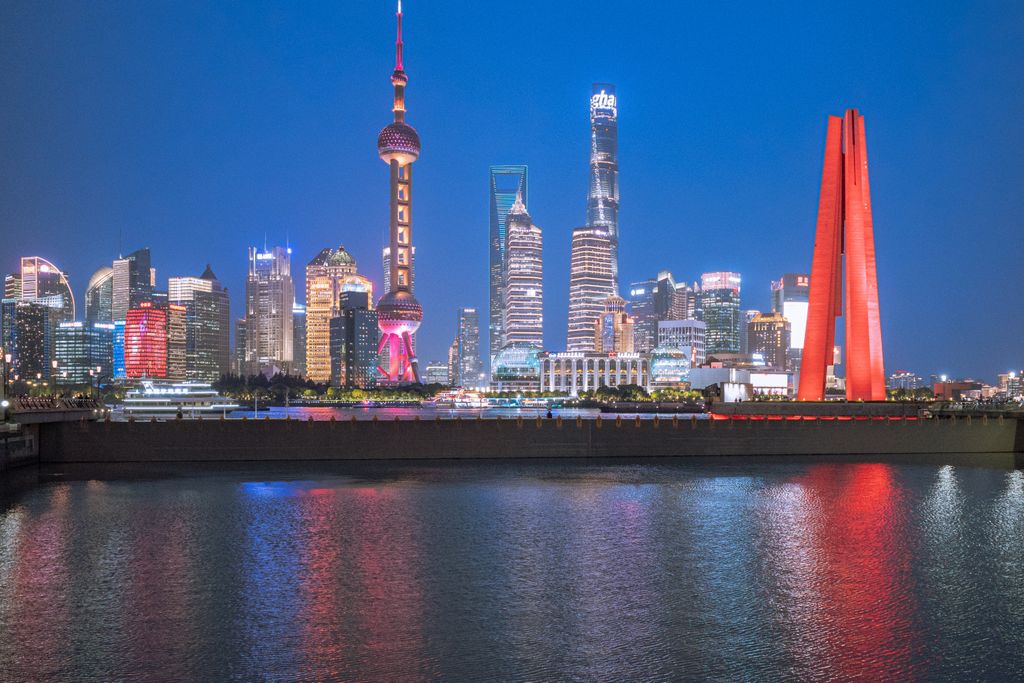
As it turns out, the place in my head is called the Yellow Mountains, or Huangshan, in China’s Anhui province. It’s only a two-and-a-half hour bullet train away from the city fondly dubbed the Paris of Asia, thanks to its abundant French architecture juxtaposed against a vast modern skyline.
The train journey — my first ever bullet train experience — was interesting in itself. I’d bought a Business Class ticket and discovered that in China, Business Class is the equivalent of First Class back home. I was the only person in the cabin, which had plush red leather seats reclining almost flat, for those who prefer to sleep rather than take in the view.
And the view was proof of a country so densely populated you could be forgiven for thinking you’d never left the city — concrete edifice after edifice, mostly clustered together in a giant swirl of grey, with the occasional ornate home peppered in.
Then, finally, the mountains arrived — with gravitas. Unlike anything I’d encountered before in China, the land was mostly uninhabited and uninhabitable. Just blissfully wild and far-reaching. It looked remarkably like a painting. The etchings had come to life.

Arriving late in the afternoon at Huangshanbei station, I picked up a pair of walking sticks for 25 yuan each (about $1) and caught a cab, hoping to reach my homestay before dark. The sun had almost fully descended by the time I arrived, but I could still see it was wedged into the side of a green pine forest.
Travelling alone, and yearning for a traditional side of China, I’d deliberately picked a place with a white-painted, stone-walled garden — this one had a pond of orange-and-white spotted carp swimming beneath a small arched bridge, and a wooden pavilion where I was offered herbal tea.
For the rest of my stay in the Huangshan Scenic Area, I was struck by how few Westerners I came across. It made me feel quite the little adventurer — though closer to the truth was probably that fewer foreign tour groups choose to visit at the height of summer, when a muggy 38-degree heat can be off-putting. With a growing middle class and the state now actively encouraging workers to take holidays, more people are exploring their own backyard instead. Either way, I felt like a walking novelty to the locals — but a heartily welcomed one, judging by the warm reception from passing strangers. One oft-repeated refrain: “You are very welcome in China.”
The language barrier was never really a problem — everyone uses an English translator on their phone. I quickly adapted to WeChat, WeChat Pay and Alipay, and Holafly kept me connected to the world beyond.
Generously detailed reviews and travel tips on Trip.com gave me the lay of the land, which matters when you’re travelling solo. Apart from being unable to use Google, Safari or nearly any of my social media (Instagram, oddly, was one of the exceptions), I managed well — and focused more on my surroundings without the usual distractions.
From my homestay, I was driven to the nearby gateway to the Yellow Mountains, scenes of floating clouds already forming in my head. A shuttle bus wound up the road to the main cable car entrance — a steep climb, made harder to gauge by fogged-up windows, until we arrived. And there it was: a live canvas of a striking Chinese landscape for as far as the eye could see.
Then began the march — along with everyone else, young and old. A Chinese student, practising her English on me, was curious why I’d chosen the Yellow Mountains, which she said were by no means the most popular. I told her, as I told many others I stopped to chat with along the way, that I’d come in search of the first images of China I’d ever seen. They came not from a screen, but from printed etchings.
The lush Huangshan mountain range, Anhui province.
The part I failed to research was exactly how far my final destination was — one of only a handful of hotels on the mountain. The night before, I’d packed a small backpack: four bottles of water and little else, travelling relatively light. My suitcase stayed safely at the homestay, which is commonly done.
That night I skipped dinner and simply sat gazing at the mountains as the sun slowly set, throwing a golden tinge across the sky.
In the morning, I was up and hiking by 5.45am. The mountain was virtually empty at first, and for a few glorious hours it felt like those of us who’d stayed the night at 1,600 metres above sea level had stolen the views from everyone else.
The walk was almost entirely uphill, toward Bright Top — 2,400 metres above sea level — and the Grand Canyon. There were moments I wondered if the view ahead could really top what I’d already seen. Then I’d round a bend to something like Monkey Staring at Sea, a single rock formation that stops you in your tracks.
Pride prevailed, and after three hours of huffing and puffing like the Magic Dragon, I finally reached the top. I held out my poles as if this were Everest. Well — it was my Everest. I posed for a happy snap, looking down, down, down to the cavernous beyond. No clouds, as it happens.
Which was strange, because I’d dreamt of clouds the night before — cotton wool enveloping me, wrapping me up snug, the child in me coming out to play. So I did get my clouds, in the end. Just not the ones from the etchings, and not the ones I expected. The mountains I’d carried in my head since childhood turned out to be real — clear skies and all. Sometimes the vision doesn’t need the clouds to be true.
Know before you go when travelling to China:
Huangshanbei station is roughly 2.5 hours from Shanghai by bullet train
Walking sticks are available at the station for about 25 yuan (~$1)
Download WeChat, WeChat Pay and Alipay before you arrive — cash and foreign cards are rarely accepted
Google, Safari and most Western social media are inaccessible
Holafly (or a similar eSIM) is worth it for staying connected
Trip.com reviews are a reliable source for homestay and route planning
Carry some USD as backup — a couple of payment blips are common even with WeChat Pay and Alipay set up
Suitcases can typically be left at your homestay while you hike — pack light for the mountain itself