

Beyond the Tourist Trail: Meet the ‘Architects’ of Regenerative Travel. Report by Lucy Broadbent in London.
When global travel ground to a halt several years ago, travel consultant Jill Hurd experienced a sudden, undeniable clarity about the future of her industry. While her business temporarily paused, a new vision began to take shape. Two of her industry peers, working in the same space, shared this exact same realization.
Tourism couldn’t go back to the way it was. The three women agreed that travel needed to evolve. It had to become more sustainable, regenerative, and highly conscious of its environmental impact and carbon footprint.
“All of us had seen this egregious mass tourism happening all over the world, resources being plundered, communities being decimated. Suddenly, with the world going into lockdown, all of us knew, as clear as day, that the industry had to pivot. We couldn’t ever go back to what it was before,” says Hurd, who operates from Los Angeles.
The Catalyst for Change
Together with Patricia McLemore, a travel consultant in Arizona, and Germaine van den Berg, a travel consultant in South Africa, the three women decided to challenge the traditional travel mindset. Aptly calling themselves “travel architects,” their mission coincides with a growing global movement to reconstruct the tourism landscape through the lens of conscious travel.
“That global pause stopped us in our tracks,” explains Germaine, whose South African business, like the others, was profoundly affected. “It made us think deeply about the way we lived before. If we were going to come back, we wanted to come back different.”
Their intention is to guide tourism away from the scorched-earth trails that funnel visitors into the same overcrowded destinations. In those spaces, mass tourism often threatens local cultures and landscapes, giving nothing back. Instead, these women believe the future lies in paths less travelled. They champion ethical tourism by abandoning big corporate hotels in favour of small, eco-conscious family-run businesses, and prioritising giving back to the destination.

The Rise of Slow Travel
“Slow tourism” is a concept defining this new era of exploration. It shifts the focus from rushing through itineraries to embracing deep cultural immersion.
“Slow travel means renting a villa or staying in a small family hotel for a week, and really discovering something about the place you are visiting, rather than passing from one hotel for a night onto the next,” explains Germaine.
By lingering longer, travellers can meaningfully connect with local artisans, savour regional food traditions, and understand the authentic rhythm of local life. “It’s better for the environment and the industry, and people tell us they enjoy traveling so much more at a slower pace, instead of returning home exhausted.”
Reimagining tourism in this way isn’t entirely new. Venice was already in the process of figuring out better ways to manage the overcrowding,” explains Patricia. “Tour operators there were already telling visitors,
‘There are other places in Italy worth exploring besides St. Mark’s Square.’”
What has changed is the industry’s widespread commitment to action. Many tour operators are now signatories of the Future of Tourism Coalition, an organization dedicated to improving global tourism alongside government agencies committed to responsible guidelines that protect destinations.
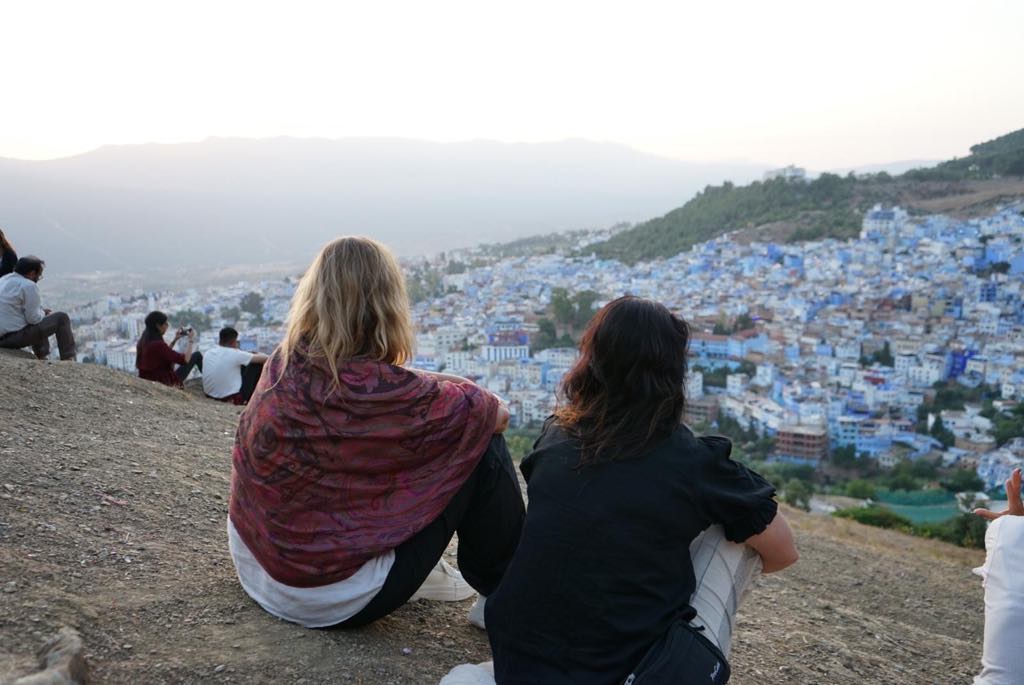
Empowering Women Through Tourism
Cazavia, the sustainable travel company the three women built together from that initial vision, leads by example. A core pillar of their regenerative tourism model is supporting female micro-industries, whether that means hiring independent female guides, visiting women-owned craft cooperatives, or dining at family-run cafes.
They also dedicate a percentage of their profits to Project Soar Morocco and work directly alongside the charity. Project Soar, the brainchild of human rights activist Maryam Montague (featured in Michelle Obama’s film We Will Rise), supports and empowers teenage girls in Morocco. As part of their ongoing partnership, the Cazavia founders travel to Morocco to meet with Montague, bringing both vital funds and global awareness to the cause.
“I think one of the profound realizations we came to, as we all reached out to each other through Zoom while the world shut down, was the power between us as women,” explains Jill. “There was a sense that together, we can do everything. Individually, we can do nothing. We women have the power to make the change. So it made perfect sense to us to support an organzation that lifts up young women. We want to make opportunities available to other women, so they too can gain power.”
For travel plans: www.cazavia.com To donate to Project Soar: www.projectsoar.org