

Our journey began at the bottom of the world. While sheltering from fierce Patagonian winds at Torres del Paine’s Hotel Lago Grey, I found myself leafing through a book about the region. It was there I first read about the extraordinary legacy of the late Doug Tompkins and his wife Kris.
The timing felt almost prophetic; their monumental rewilding efforts had not only protected the jagged peaks my husband Jo and I were currently exploring, but also the vast Iberá Wetlands in north-east Argentina, the very next major stop on our itinerary.
I was completely captivated by their story.
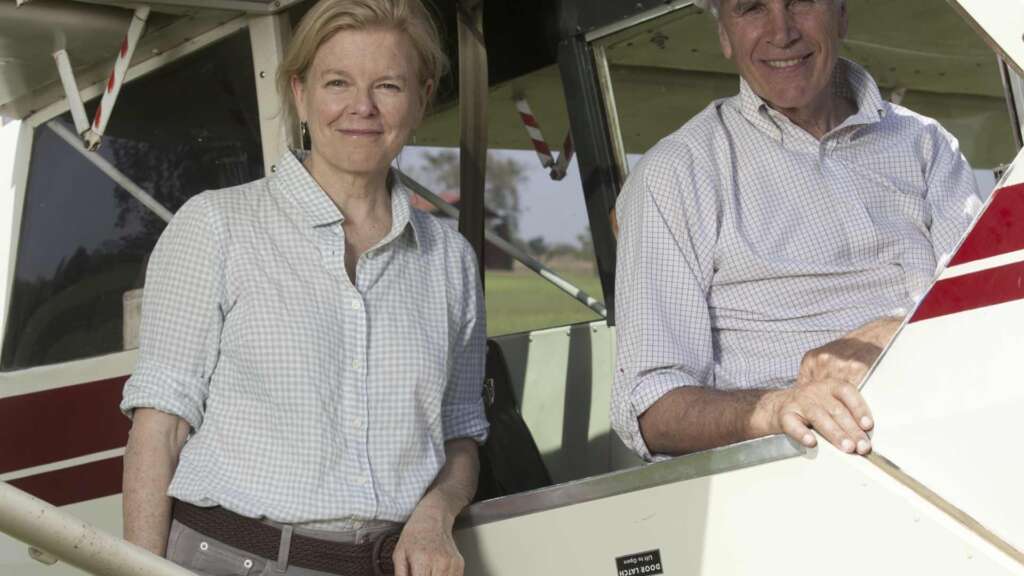
Philanthropists and visionaries Doug and Kris Tompkins are ranked amongst the most successful conservation philanthropists in history. Once titans of the apparel industry behind The North Face, Esprit, and Patagonia, they grew disillusioned with the environmental toll of consumer culture. In a radical pivot, they traded the boardroom for the South American wilderness, dedicating their immense resources to unprecedented land preservation.

After the granite peaks of Patagonia, we joined Intrepid Travel on their Argentina & Brazil Adventure, a route that perfectly aligned with our love for immersive, responsible travel. It was on this Intrepid Travel itinerary that the true scale of the Tompkins’ monumental legacy revealed itself as we entered Argentina’s Iberá Wetlands.
A Jewel of Global Importance
The Esteros del Iberá is a place that defies simple description. It is a sprawling aquatic universe of marshes, lagoons, and floating islands, thrumming with life. Here, our brilliant Intrepid Travel guide Selva and the Iberá Parklands team Sebastian Aires, Victoria Torres and driver Diego Pavon helped our group navigate the area.
Surveying the waterways, watching capybaras graze lazily on the banks and spotting the rich birdlife which includes 360 species, was mesmerising. We also saw the once endangered Marsh deer and to our delight prehistoric looking Yacaré caiman were in abundance. We didn’t see jaguars, giant otters, or giant anteaters but that didn’t much matter. The fact was these animals were there and thriving since being rewilded into the Wetlands.
While reading another book on this region at my hotel in nearby Posadas, I was struck by Doug Tompkins’ own words about the ecosystem. Reflecting on his life’s work, he wrote:
“I arrived in Argentina for the first time in 1961. Today, after fifty years, I love and know this country well. I have had the privilege of travelling extensively through all its provinces (even to Argentine Antarctica), climbing formidable peaks in Patagonia, whitewater kayaking, training and skiing competitively in Bariloche… and helping to establish both provincial and national parks in Misiones and Santa Cruz.”
For Doug and Kris, conservation was clearly so much more than a philanthropic side project; it was a deep, lived commitment for which they will be forever loved in equal measure.
As Doug explained in the book ‘Iberá Wetlands:
“This long relationship with Argentina, and my deep affection for its landscapes and its people, strengthen my belief that this is a country of outstanding beauty and great ecological wealth, with one of its most valuable natural treasures being the Esteros del Iberá in the province of Corrientes.”
The Epiphany of 1997 Which Led To The Birth of Iberá Nature Reserve
The Tompkins’ journey with Iberá didn’t begin immediately. It was sparked by a specific visit that changed the trajectory of the region forever. Through their non-profit, The Conservation Land Trust (CLT), they sought to stimulate biodiversity protection on a massive scale.
“My fascination and affection for Iberá were awakened in 1997, when colleagues invited Kris and me to the region to show us some properties for potential purchase… We immediately saw the potential that these private lands could have, under conservation management, to increase the efficiency and improve the design of the existing public lands that made up the Iberá Nature Reserve.”
They didn’t just buy land from the local ranchers to safeguard the flora and fauna; they moved there. Doug noted that for years, he and Kris lived “half of every year on the borders of these magnificent wetlands,” immersing themselves in the very environment they were fighting to protect. They became pioneers of “rewilding,” actively working to reintroduce locally extinct species like giant anteaters, pampas deer, and eventually, the apex predator of the Americas: the jaguar.
When discussing major animal rewilding in “the wetlands,” Iberá Wetlands is now the global benchmark. Spearheaded by Rewilding Argentina, this massive conservation effort has successfully returned several keystone species that had been locally or nationally extinct for decades.
The rewilding efforts in the Iberá Wetlands have successfully brought back several key mammal species, anchored by the return of the region’s apex predator, the jaguar. Reintroduced in 2021 after a 70-year local extinction, the jaguar population is now growing rapidly with multiple wild-born litters, reaching an estimated 50 wild individuals thanks to an abundance of prey.
This monumental success builds upon the foundation laid by the giant anteater, the project’s pioneer species introduced in 2007. From an original group of 72 rescued orphans, the giant anteater population has thrived and more than doubled to over 150 individuals today.
Large herbivores and ecosystem engineers have also been successfully reintroduced to restore the ecological balance of the wetlands. Translocated groups of the once severely depleted pampas deer now form the largest single population of this species in Argentina, boasting around 250 individuals. Joining them are dozens of collared peccaries, forming multiple herds of these pig-like mammals that are now reproducing entirely independently in the wild after being extirpated long ago. Furthermore, small foundational groups of lowland tapirs have been introduced into specific sectors to reclaim their critical role as major seed dispersers across the ecosystem.
Beyond terrestrial mammals, the project has made significant strides in reintroducing avian and aquatic species that had vanished from the region. The vibrant red-and-green macaw, extinct in the wild in Argentina for over a century, is now flying free in the northern forests with a population of over 15 to 20 individuals, alongside small translocated flocks of the large, forest-dwelling bare-faced curassow, which are currently being monitored as they adapt and disperse seeds. In the waters, a small foundational number of globally endangered giant river otters—previously extinct in Argentina has been established through a handful of breeding pairs meant to anchor a future wild population.
“A Big Man” with a Bigger Legacy
It is a profoundly heartbreaking reality that Doug did not live to see the culmination of this extraordinary conservation dream. Tragically, he passed away in a 2015 kayaking accident, dying in the very Patagonian landscapes he loved so fiercely. Yet, in the wake of that immense loss, Kris channeled her grief into action. She has carried their shared vision forward, ultimately fulfilling their life’s work by handing over millions of acres to the Chilean and Argentine governments to secure a legacy of vast new national parks.
The physical beauty of Iberá is undeniable, but it is the human element of this rewilding project that resonates most deeply. Exploring the reserve, Jo and I felt a profound sense of privilege, acutely aware that we are among the very recipients benefiting from these decades of visionary conservation.
We weren’t just hurried from one wildlife sighting to the next. Instead, we leaned into an unhurried pace, spending meaningful time with our guide Selva and the park rangers who act as the fiercely proud guardians of this resurrected ecosystem.
Generously sharing their rich local culture, they cooked us a traditional asado, a spectacular Argentine barbecue roasted slowly over an open wood fire. We feasted on the perfectly charred meats, followed by incredible homemade desserts thick with local dulce de leche. But the true heart of the afternoon was the ritual of yerba mate prepared by Sebastian. He carefully poured hot water over the earthy green leaves and passed the metal straw, or bombilla. Cradling the warm gourd in my hands, I listened as he explained the profound cultural significance of this daily practice.
“Mate is more than a drink in Argentina,” Victoria later told me with a warm smile,”It is a bond of friendship.”
As we drank our Mate, Diego told us he’d met Doug Tompkins a few times albeit briefly and spoke of him with a reverence usually reserved for folk heroes. He described him as a “big man.”
Diego was grateful for the thriving wetlands, a landscape that now sustains local communities through ecotourism rather than destructive agricultural practices and shared a sentiment .
“It took a foreigner,” Diego explained, “to show us how much we have to appreciate of our own country.”
It was clear that the Tompkins have done more than rewild the land; they rewilded the local spirit.
They proved, as Doug wrote, that there are “ways to make conservation and production compatible.” In doing so, they left behind a spectacular landscape that will forever stand as a testament to what is possible when vision, passion, and a profound respect for nature come together.
For anyone seeking a travel experience that is as transformative for the soul as it is for the planet, navigating the Iberá Wetlands is a wonder for the eyes and learning about the success of rewilding is an incredible experience and provides a huge dose of hope.
The Visionaries Behind the Wilderness
A look at the extraordinary lives of Doug and Kris Tompkins, the visionaries behind the largest private land donation in history.
Doug Tompkins (1943 – 2015)
- The Corporate Ascent: Before he was a conservationist, Doug was a captain of the outdoor apparel industry. In 1964, he founded the iconic outdoor brand The North Face as a small ski and backpacking retail shop in San Francisco. A few years later, he co-founded the global fashion brand Esprit, which became a billion-dollar empire.
- The Pivot: By the late 1980s, increasingly disillusioned by consumer culture and the environmental impact of the fashion industry, Doug sold his stakes in his companies. He traded the boardroom for the wilderness, moving to remote Chilean Patagonia to dedicate his wealth and life to deep ecology and land preservation.
- A Tragic End: Doug passed away in 2015 at the age of 72 from severe hypothermia following a kayaking accident in Patagonia. He died doing what he loved, in the wild landscapes he fought so hard to protect.
Kris McDivitt Tompkins (1950 – Present)
- The Business Leader: Kris’s background is equally formidable. She started working with Yvon Chouinard at age 15 and eventually became the CEO of Patagonia, Inc. over a 20-year career, transforming it into an industry innovator and helping forge its renowned, eco-conscious “anti-corporate” model.
- A Shared Vision: Retiring from her role as CEO in 1993, she married Doug and joined him in South America. Together, they formed an unstoppable partnership, merging their formidable business acumen with a radical vision for rewilding.
- The Global Patron of Protected Areas: Following Doug’s sudden passing, Kris continues their legacy as the President of Tompkins Conservation and the President of the Board of Rewilding Chile. She has also been the key driving force behind the creation of specific, monumental reserves like Patagonia National Park in Chile and Monte León National Park in Argentina.
- A Decorated Advocate: Kris’s relentless work has elevated her to the global stage. She is the first conservationist ever to be awarded the prestigious Carnegie Medal of Philanthropy, and in 2018, the United Nations named her its Global Patron for Protected Areas. (Travel Tip: For pure inspiration before your own journey, her 2020 TED Talk, “Let’s Make the World Wild Again,” below, is an absolute must-watch).
Their Combined Legacy
- Land Saved: To date, Tompkins Conservation and its independent offspring, Rewilding Argentina and Rewilding Chile, have helped protect more than 14.8 million acres of land across the two countries, working in collaboration with governments and other philanthropists.
- Rewilding Pioneers: They are globally recognised for reintroducing extirpated (locally extinct) species back into their native habitats, including giant anteaters, pampas deer, collared peccaries, and the apex predator of the Americas: the jaguar.
- Economic Impact: By transitioning regional economies from extractive industries to nature-based tourism, they have provided sustainable livelihoods for thousands of locals across Chile and Argentina.